Journal · Plein air
Plein air painting in San Diego
After years of painting outdoors in Florence, Stockholm and Barcelona, San Diego was a recalibration: the light is brighter, drier and far less forgiving. These are the six locations I return to, and what each one is good for teaching you.
Sunset Cliffs, Point Loma
The sandstone here holds a warm ochre that turns almost cadmium as the sun drops. Because the cliff faces west, the value structure inverts quickly: block in the dark of the water first, keep the rock as your lightest mass, and resist chasing the sky. A classical approach helps — establish three values before any colour, or the whole passage collapses into orange within twenty minutes.
La Jolla Cove and the Shores
Marine layer mornings give La Jolla a genuinely European greyness — closer to a Stockholm harbour than to a postcard. Cool light flattens the sea into two or three related greys, which makes it the best spot in the county for practising subtle temperature shifts. Paint the cove from the bluff walk; the Shores works better if you want figures and the long, low beach horizon.
Balboa Park — Botanical Building and Lily Pond
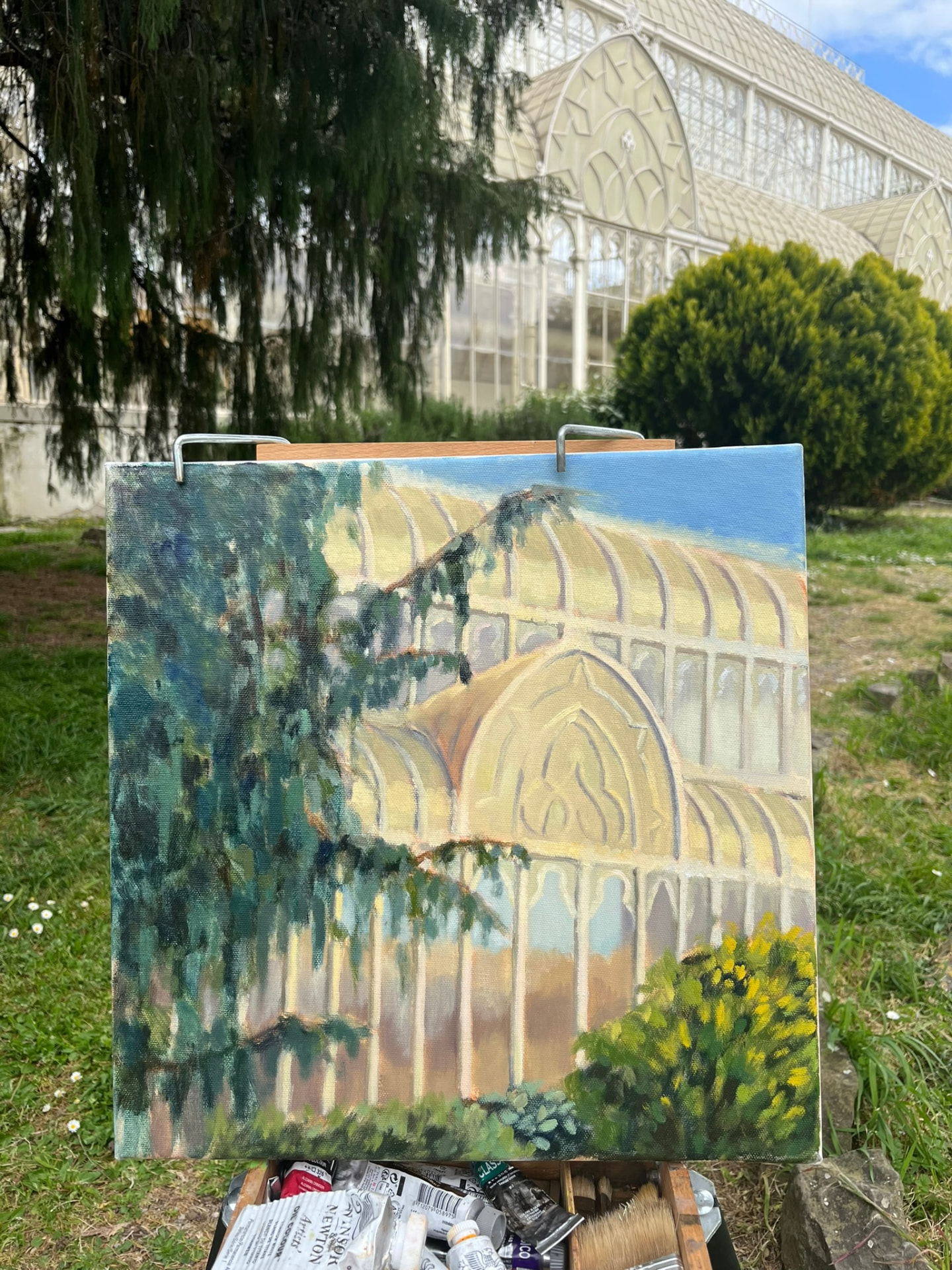
Architecture, water and foliage in a single motif, with shade for a long session. The lath structure gives you a repeating rhythm to draw against, which is the ideal exercise if you struggle with perspective under time pressure. I painted the Crystal Palace greenhouse in London on the same principle: glass and lath are drawing problems disguised as colour problems.
Torrey Pines State Reserve
Hard, dry light and a sculptural landscape of eroded sandstone and wind-bent pines. Bring a small panel — 20 × 25 cm at most — because the wind on the upper trails will treat anything larger as a sail. This is a place for form, not atmosphere: work the planes of the ridge like an écorché study.
Coronado Ferry Landing and the Embarcadero
Skyline, masts and reflected artificial light. Reflections are the study here: they are always lower in value and less saturated than the object making them, and almost everyone paints them too bright. Take one hour, one narrow palette, one panel.
Old Town and Presidio Hill
Adobe walls, tiled roofs and jacaranda give you warm-against-cool without leaving the shade. It is the friendliest spot for a first outdoor session, and the one I use when teaching — easels can stand on level ground and nobody is fighting the wind.
What to bring
- A pochade box or half-French easel, plus a panel holder for wet work.
- Panels no larger than 25 × 35 cm — outdoor light changes faster than you can cover a large surface.
- A limited palette: white, yellow ochre, cadmium red, ultramarine, burnt sienna. Mixed greys beat tube greens.
- A viewfinder or phone camera to lock the composition before the shadows move.
- A timer set to 90 minutes. When it rings, the session is over — the light you started with no longer exists.
Paint one of these with me
I run small plein air sessions and studio classes in San Diego, built on the same classical training I received in Florence and Stockholm.